When Caring Becomes Personal
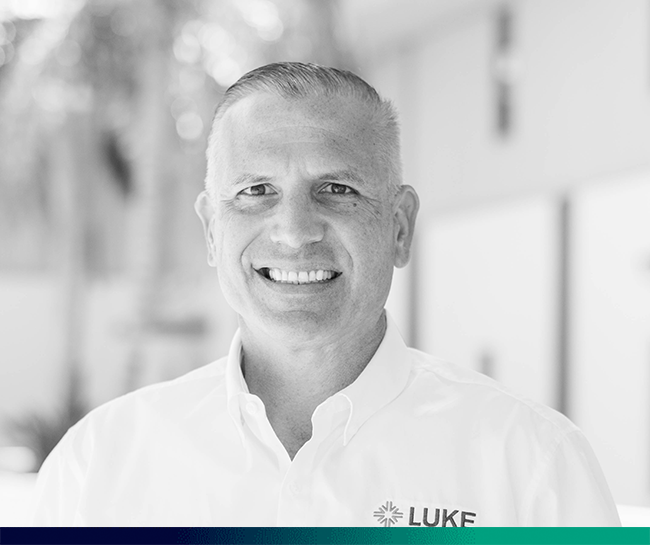
By John Sanders, LUKE CEO
Most workplace wellness programs encourage exercise, better nutrition, preventive care, and healthier habits, and all those things matter. We also know people who appear physically healthy and continue performing at a high level while carrying challenges few people can see. They may be grieving a loved one, struggling financially or with an addiction, caring for a dying parent, questioning their purpose, experiencing despair after a long-term relationship ends, or carrying stress that affects their relationships and work. Their experiences remind us that wellbeing encompasses far more than physical health or outward performance.
This is why LUKE has chosen to focus on human flourishing and the whole person—mind, body, and spirit. Human flourishing recognizes that physical and emotional health, meaning and purpose, character, close relationships, financial stability, and community all shape how well a person is living. Healthy relationships provide strength during difficult seasons. Purpose can sustain someone through adversity, while faith, belonging, and community can provide hope when circumstances feel overwhelming. Caring for these dimensions together helps people live, serve, and lead well.
For me, this effort is deeply personal and not just professional. I have a child with bipolar disorder who has attempted suicide multiple times, and I lost two siblings who reached a place of such profound hopelessness that they took their own lives. I know firsthand the devastation that follows when someone in crisis can no longer see a way forward. I have also witnessed the courage it takes to keep moving forward and the difference that faith, compassionate care, trusted relationships, and people who remain present can make. These experiences are the source of my optimism, and they have convinced me that lives can change, people can heal, and a path forward can emerge even during the darkest seasons. That is why I believe so strongly in bringing together clinical care, spiritual support, coaching, families, and communities to care for the whole person.
My understanding of whole-person care has been strengthened through close working relationships with many people. Dr. Tim Clinton, president of the American Association of Christian Counselors, has broadened that understanding by introducing me to leading scholars whose work informs human flourishing. Two others who have shaped my thinking, and whose perspectives LUKE has explored in recent articles, are Dr. Jonathan Sherin and Chaplain Tom Solhjem. Dr. Sherin is a psychiatrist and neurobiologist who has led major public mental-health systems and cared for veterans whose suffering no diagnosis could fully explain. Chaplain Solhjem, the former Chief of Chaplains of the United States Army and chair of LUKE’s Advisory Board, spent nearly five decades serving in the Army and walking alongside warfighters and their families through deployment, grief, moral injury, family strain, questions of faith, and the demands of service.
In many wonderful conversations, Dr. Sherin has patiently explained to me that some of the deepest wounds involve guilt, shame, betrayal, loss of trust, and questions about identity, purpose, forgiveness, and belonging. And while clinical care remains essential, his experience has taught him that meaningful healing may also require attention to the moral, relational, and spiritual dimensions of a person’s life. He has helped me understand the importance of looking beyond symptoms, remaining present when people share what they have been afraid to name, and creating pathways toward reconciliation, restored relationships, and hope.
Chaplain Solhjem reaches a related conclusion through his experience in the Army. In his experience, warfighters can possess a deep commitment to service while struggling to connect that service to a sustaining sense of meaning and purpose. He has seen firsthand that readiness involves physical and mental fitness along with the moral and spiritual strength people draw upon when the mission is difficult or the burden is heavy. Chaplains help people find that strength through trusted relationships, spiritual care, shared hardship, and a steady presence during life’s most difficult moments.
These conversations help explain why I am so grateful that LUKE is working with Dr. Sherin, Chaplain Solhjem, Dr. Clinton, and so many other amazing leaders who are dedicated to supporting the missions of the federal partners we serve. The compassion of these wonderful people has taught me that caring requires understanding the full context of a person’s life. They have also shown me that meaning, faith, purpose, identity, and belonging are sources of great strength. Together, they reinforce a principle at the center of LUKE’s work: quality care begins by seeing the person fully and bringing together the support that helps that person flourish. Clinicians, chaplains, coaches, families, and communities each have distinct roles, and their contributions need to reinforce one another throughout a person’s life.
This principle is especially important for the people LUKE serves—warfighters, veterans, federal law enforcement officers, first responders, and their families—as well as the healthcare professionals who care for them. Supporting these men and women requires clinical excellence along with trusted relationships and resources that strengthen resilience, purpose, connection, and hope. My conversations with people like Dr. Sherin, Chaplain Solhjem, and Dr. Clinton are helping me, and others at LUKE, understand more deeply how these elements can come together in ways that honor the whole person.
These experiences and relationships have strengthened my conviction that human flourishing is an ongoing journey toward greater health, connection, purpose, character, stability, and hope. At LUKE, we want to support those heroes who serve our country, those who care for them, and the people within our own organization who make that mission possible.